Partner
The Merchant Qualification Process: Not Every Product Deserves a Placement
Not every product deserves placement. Use a merchant qualification process that protects trust and keeps your list compounding.
August 18, 2026 · 6 min read
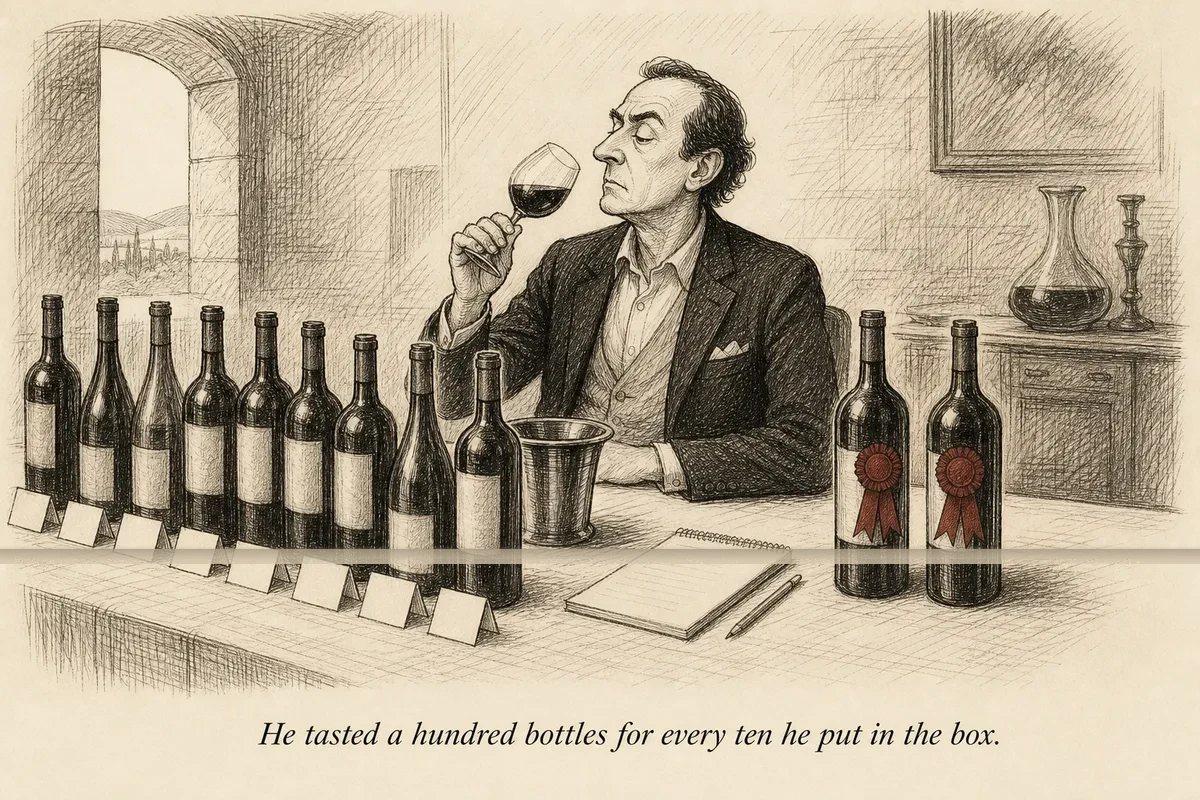
A friend of mine runs a wine subscription service. He tastes a hundred bottles for every ten he puts in a box. His subscribers don’t know about the ninety he rejected — but they absolutely notice the quality of the ten he selected.
That ratio — ten-to-one rejection — is what makes him a curator instead of a middleman.
I apply the same ratio to merchants. For every product that earns a placement in my toll position infrastructure, I’ve evaluated and rejected roughly eight to ten others. Different commission rates. Different product quality. Different customer service reputations. Different refund policies.
My subscribers don’t know how many merchants I’ve said no to. But they notice — in the form of consistent quality, low buyer’s remorse, and the trust that keeps them opening emails month after month — that whatever I recommend is going to be worth their money.
That curation standard is the difference between an operator whose list gets better over time and one whose list gets tired of being sold to.
The cost of a bad recommendation
Let me be specific about what happens when you promote a product that doesn’t meet your subscribers’ expectations:
The immediate cost: The subscriber who bought based on your recommendation and had a poor experience now associates negative feelings with your emails. They don’t just distrust the product — they distrust your judgment. Next time you recommend something, the implicit question is: “Is this going to be another [bad product]?”
The measurable cost: Open rates drop 3-7% for the segment that had a bad experience. Click rates drop further — 10-15% — because even subscribers who open won’t click recommendations from a source that burned them. It takes 6-8 positive experiences to rebuild the trust destroyed by one bad recommendation.
The hidden cost: Subscribers who had a bad experience but don’t unsubscribe become “silent disengagers.” They stay on your list, stop clicking, stop buying, and drag down your engagement metrics — which affects deliverability for everyone else. They’re worse than unsubscribes because they’re invisible damage.
The revenue math: One bad recommendation to a 4,000-person list, with 5% of recipients having a negative experience (200 people), costs approximately $400-$600/month in lost engagement for the next 3-6 months. On a single product recommendation that might have earned you $300 in commissions. The math never works.
This article continues for paid subscribers with the five-factor merchant qualification system (Product Quality, Commission Structure, Customer Experience, Brand Alignment, and Longevity), red flags that disqualify instantly, how to evaluate a merchant without buying the product yourself, and the ongoing monitoring system for approved merchants.
Hybrid Content
This article continues for subscribers.
The full implementation — the steps, the templates, the math — is delivered via the newsletter.
Unsubscribe in one click. Useful operator material only. Promotions, sponsors, and partner links will be disclosed.
Partner
Want to find better partners?
This article explored the partner dimension. The newsletter delivers qualification frameworks and outreach patterns weekly.
Unsubscribe in one click. Useful operator material only. Promotions, sponsors, and partner links will be disclosed.