Monetize
The Sideways Survey: Discovering What Subscribers Actually Buy
Ask what subscribers already bought, not what they might want. The Sideways Survey turns 48 hours of replies into product-placement intelligence.
June 19, 2026 · 8 min read
I sent my first survey to 1,200 subscribers on a Thursday afternoon. Three questions. Clean design. Professional. “What kind of products would help you most?” “What price range feels comfortable?” “What topics should we cover next?”
Eighty-three people responded. I was thrilled.
Then I read the responses. Everyone wanted a “comprehensive guide to everything.” The comfortable price range was unanimously “free to $20.” The topics they requested were so broad they could have described any list in any niche on the entire internet.
I’d just burned a send on 1,200 engaged subscribers and learned absolutely nothing I could act on. The data was a mirror — it reflected what people think they should want, not what they actually spend money on.
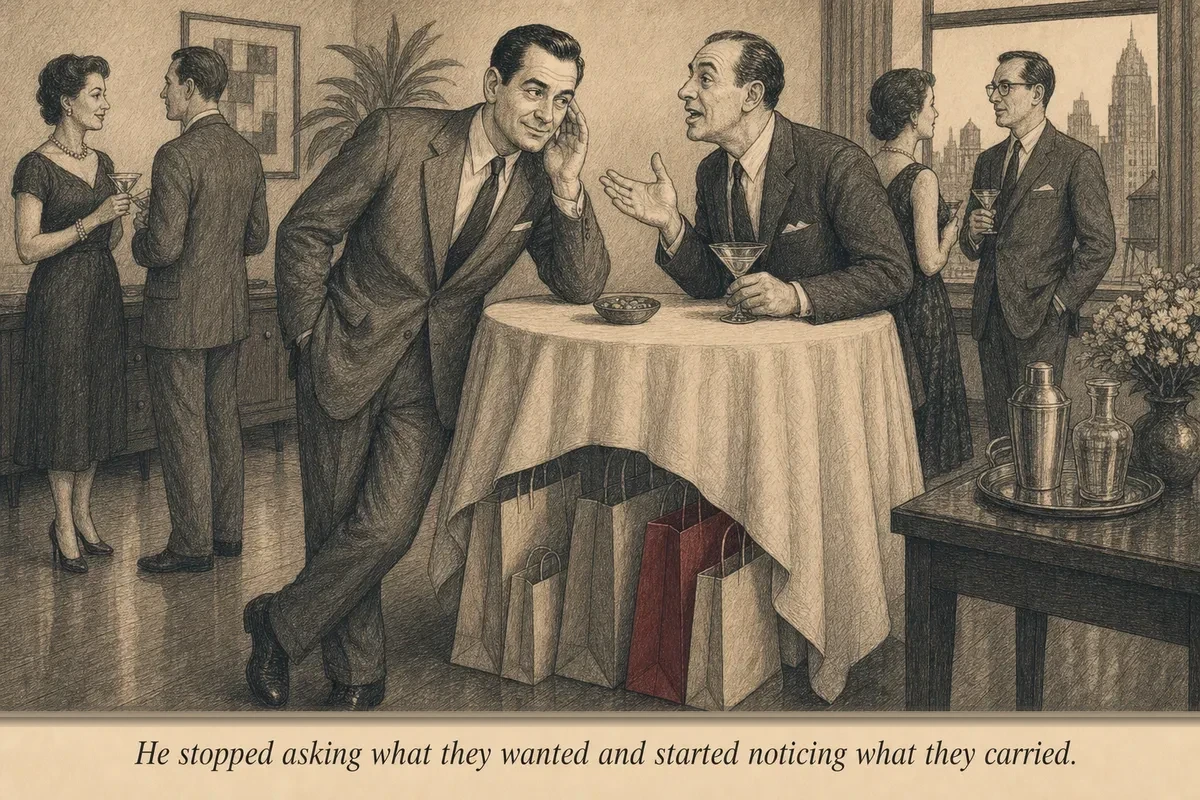
A few weeks later, I came across an operator who’d spent decades selling other companies’ products to his own subscriber base. He’d made the same mistake for years before flipping the question entirely. Instead of asking what people would buy, he asked what people already bought.
Two questions. No rating scales. The responses told him exactly which products to stock, at what price points, in what formats. He called it the Sideways Survey. And it changed how I think about every product decision in my toll positions.
%%{init: {'theme': 'neutral'}}%%
flowchart LR
    A["What would you buy?\n(Opinion)"] --> B["Unreliable\nSpeculative"]
    C["What did you buy?\n(Behavior)"] --> D["Proven Buyers\nReal Price Points\nKnown Formats"]
    D --> E["Your Product Inventory"]
    style B fill:#c2410c,color:#fff
    style D fill:#4a7c59,color:#fff
Why buying history beats buying intentions
Buying history is behavioral data. Buying intention is opinion data. The difference matters.
When someone tells you they bought a $200 nutrition course last month, you know three things with certainty:
- They spend money in this category. Not hypothetically. Actually. With their credit card. They’re a proven buyer.
- They spend at this price point. A $200 purchase tells you the $97 product you’re considering is within their demonstrated range.
- They trust this type of product. The purchase reveals a buying frame — courses, books, tools, subscriptions, supplements, equipment — that tells you which product formats they respond to.
When someone tells you they would like a better nutrition resource, you know nothing actionable. You don’t know if they’d pay for it, how much they’d pay, what format they’d prefer, or whether they’d actually buy when you put it in front of them.
The sideways approach — asking what they already did instead of what they’d hypothetically do — produces intelligence you can act on immediately.
The two questions
The survey is disarmingly simple. Two questions. No rating scales. No multiple choice. Open-ended, conversational.
Question 1: “What [niche] products have you bought in the past 6 months?”
Question 2: “What other products — tools, courses, books, subscriptions, anything — that help you [reach your goal in this niche] have you bought in the past 6 months?”
That’s it.
Question 1 captures the obvious purchases — the products directly related to the niche. If your list is in personal finance, this catches the budgeting apps, the investing courses, the financial planning books.
Question 2 captures the adjacent purchases — the products the subscriber doesn’t immediately associate with the niche but bought in service of the same goal. For the personal finance list, this catches the career development course (to earn more), the negotiation book (to negotiate salary), the spreadsheet template (to track spending), the tax preparation software (to keep more of what they earn).
Question 2 is where the real intelligence lives. It reveals the Customer Success Roadmap — the full map of products a subscriber buys on their journey to their goal. Most of those products are ones you’re not currently promoting. Each one is a potential placement in your toll position inventory.
This article continues for paid subscribers with the deployment protocol (where and how to run the survey), the compilation methodology, how to convert results into product placements, integration with your intelligence database, and a ready-to-use survey template.
Hybrid Content
This article continues for subscribers.
The full implementation — the steps, the templates, the math — is delivered via the newsletter.
Unsubscribe in one click. Useful operator material only. Promotions, sponsors, and partner links will be disclosed.
Monetize
Want to structure better deals?
This article covered one monetization pattern. The newsletter delivers deal structures and revenue mechanics every week.
Unsubscribe in one click. Useful operator material only. Promotions, sponsors, and partner links will be disclosed.